
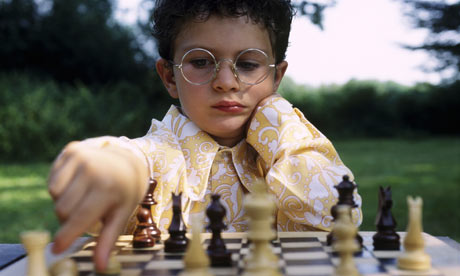
 The other day I was wondering how to teach chess to my son without brainwashing him with the various movement of the pieces and check mating. Things he does not appreciate too much. So I started searching methods and by asking questions on a large chess forum, I harvested some very valuable advice.
One grandmaster who gives lessons to children aged 5-6 advises to play games with reduced hardware. For example play a match with 8 pawns against eight pawns, the aim being to take all the pieces of the opponents, and where pawns can promote. Or play a game with reduced chessmen, eg queen and three pawns against knight, bishop and three pawns. Children are interested in taking (eating) the pieces of the opponent, the concept of mat is too abstract for them.
Another recommendation by a specialist is to use handicrafts. Bring colored pencils, a sharpener, an eraser, and a notebook and it goes very well. If small kids do not yet know to move the pieces, add color to some of the boxes or trace a path (especially for the knight), etc. Generally, everything is based on equipment (scissors, crayons, erasers, post-it on the board wall to mark the boxes, etc …) and works fine at this age to learn a game like chess. Otherwise try to think of memory games like reconstruction of a single position that was on the wall board. Along the same lines, ask them to place on the chessboard a position of mate with a tower, or a queen, after having defined the patterns in a previous meeting .
The only notion of checkmate, although it is the object of the game, is so complex to understand for children this age. Even after 30 sessions of one hour over the year, only 10 to 20% of children confusedly perceive what the checkmate is all about. One should therefore be aware that at that age, more than learning chess, this is an awareness of the game of chess that you can provide, and chess is then effectively a support to introduce notions of official instructions like two-way table entries, location in space and geometric concepts associated with socialization.
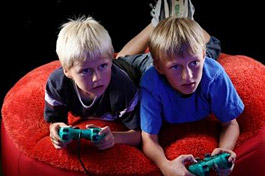 Since the digital revolution in the early 2000s, children have started to invest more and more of their time into video games. Studies show that the average American 8th grader spends 23 hours a week playing video games as opposed to 12 hours invested in such games by average 8th grader in 2001.
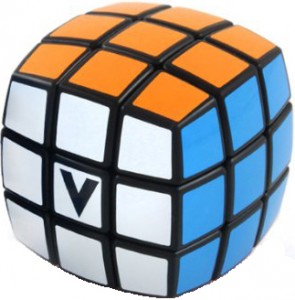 The Rubik’s cube has been in existence since the mid 1970’s. This famous toy was named after its inventor Erno Rubik.